



In a world where technology is reshaping industries, translation is no exception. Gabriel Fairman, CEO of Bureau Works, shared his insights on how universities can better prepare students for the rapidly evolving translation field. His perspective focuses on building foundational skills rather than emphasizing tools and techniques that may quickly become obsolete.
Focus on Language, Not Just Technique
Gabriel believes universities should shift their priorities when teaching translation. Instead of focusing solely on specific techniques or tools, he suggests a deeper dive into the fundamentals of language and meaning.
"If you're a good writer, if you know how to manipulate language well…that gives you an edge," Gabriel explains.
These skills create a strong foundation, allowing future translators to adapt to a changing industry.
The Human Role in Translation
Even as artificial intelligence becomes more prominent, Gabriel emphasizes the importance of human contribution to translation.
"Humans will be the owners of culture. They're still the bearers of identity and connection," he states.
Language is an intimate expression, even in technical contexts. Translators need to understand the deeper cultural and emotional layers of language to remain relevant and impactful.
Adapting to a Rapidly Changing Industry
Gabriel highlights the risks of focusing too heavily on specific tools or techniques. These can quickly become outdated, leaving students unprepared for the future.
"Imagine spending four years learning a technique that’s obsolete by the time you graduate," he says.
Instead, he recommends universities emphasize skills that foster adaptability:
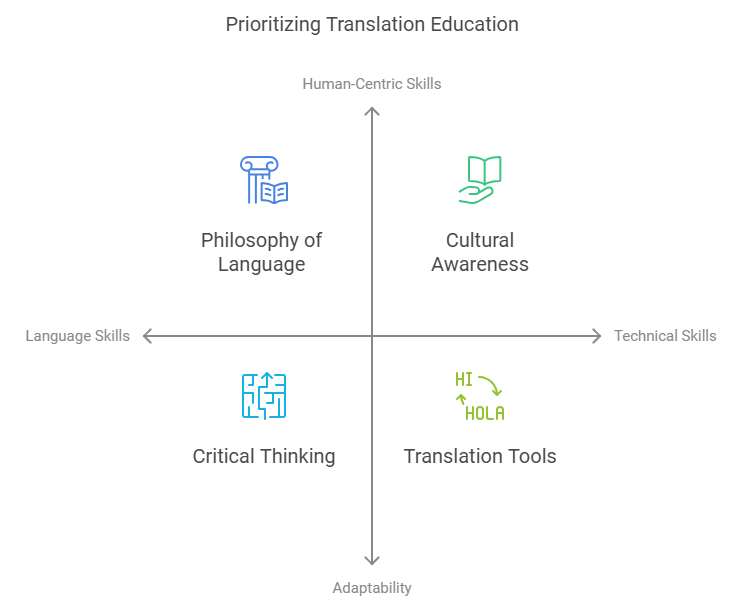
Challenges in Shifting Perspectives
Transforming how universities teach translation is no small feat. Gabriel acknowledges the challenges:
Despite these hurdles, Gabriel believes that focusing on critical analysis and creativity will better equip students for the future.
"Anything that goes more in the direction of thought analysis and creative ability is going to be more useful than focusing on technique," he concludes.
Preparing for What’s Next
For students entering the translation field, the key is to develop a mindset of lifelong learning. With technological advancements and industry changes accelerating, adaptability will be the most valuable skill of all.
By prioritizing language mastery and critical thinking, universities can help students not only survive but thrive in the evolving world of translation.